Intent-based marketing: How to target ready buyers | TrueVocalAI
Share
Product
Intent-based marketing: How to target ready buyers
In business, wasting time is wasting money, so you need a marketing strategy that is efficient and makes the best use of your resources. In fact, HubSpot’s 2026 State of Marketing Report found that 58% of marketers say AI referral traffic carries much higher intent, meaning the visitors who reach your site are already further along in their buying journey. (More on this data later!)
GOBy Godwin Omale
Jul 5, 20269 Min Read
In business, wasting time is wasting money, so you need a marketing strategy that is efficient and makes the best use of your resources. In fact, HubSpot’s 2026 State of Marketing Report found that 58% of marketers say AI referral traffic carries much higher intent, meaning the visitors who reach your site are already further along in their buying journey. (More on this data later!)
Table of Contents
What is intent-based marketing?
Why intent-based marketing matters and drives better results.
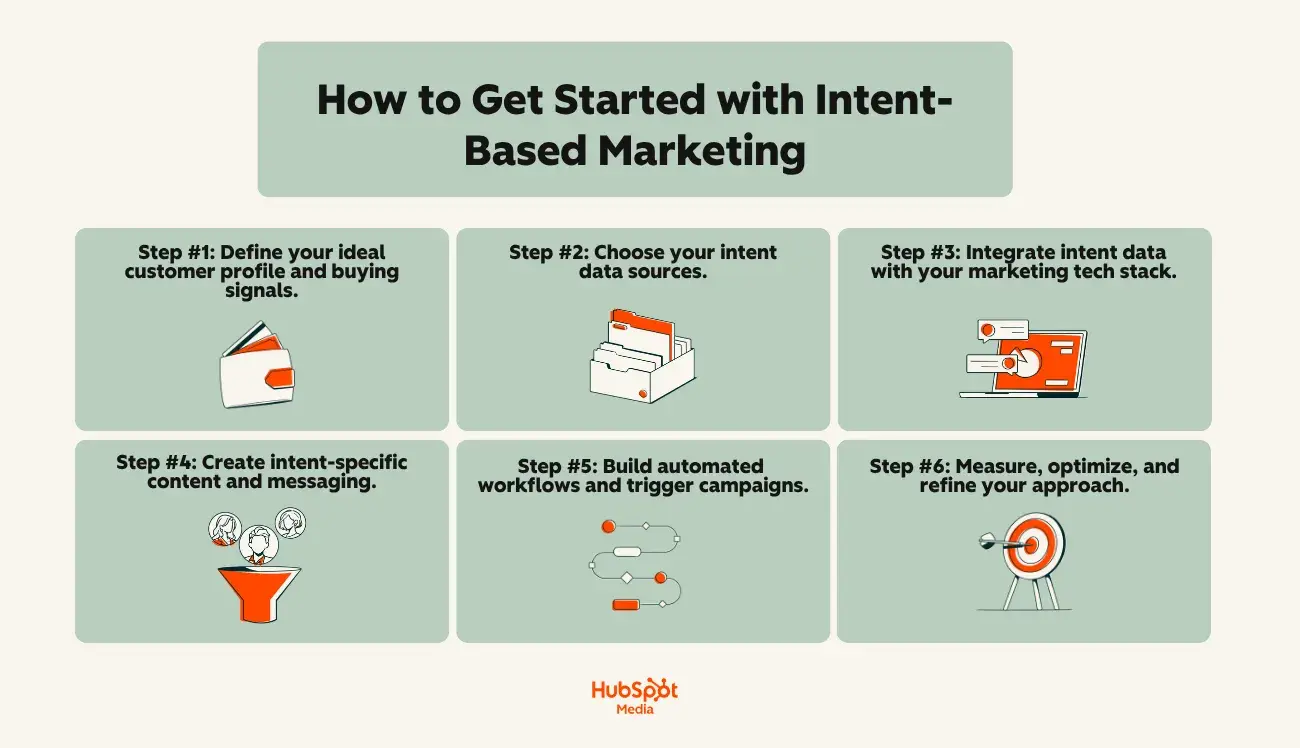
How to Get Started with Intent-Based Marketing
Types of Intent Data and How to Use Them
Intent-Based Marketing Tools and Platforms
3 Intent-Based Marketing Playbooks You Can Copy
Frequently Asked Questions (FAQs) About Intent-Based Marketing
What is intent-based marketing?
Intent-based marketing (IBM) is a strategy that uses buyer intent signals to target prospects who are more likely to buy.
Instead of broadcasting a single message to a broad audience, it reads behavioral cues (i.e., searches, content views, downloads, and repeat visits) and focuses its efforts on accounts showing real purchase intent.
The fuel for this is intent data. Buyer intent signals show that a person or account is researching or considering a purchase. Intent comes in two forms:
Active intent: direct, high-readiness actions.
Passive intent: early, low-commitment research.
For B2B marketing teams, IBM simply offers a more efficient path to customer acquisition.
IBM works by collecting signals, scoring interest, and activating campaigns or outreach based on readiness.
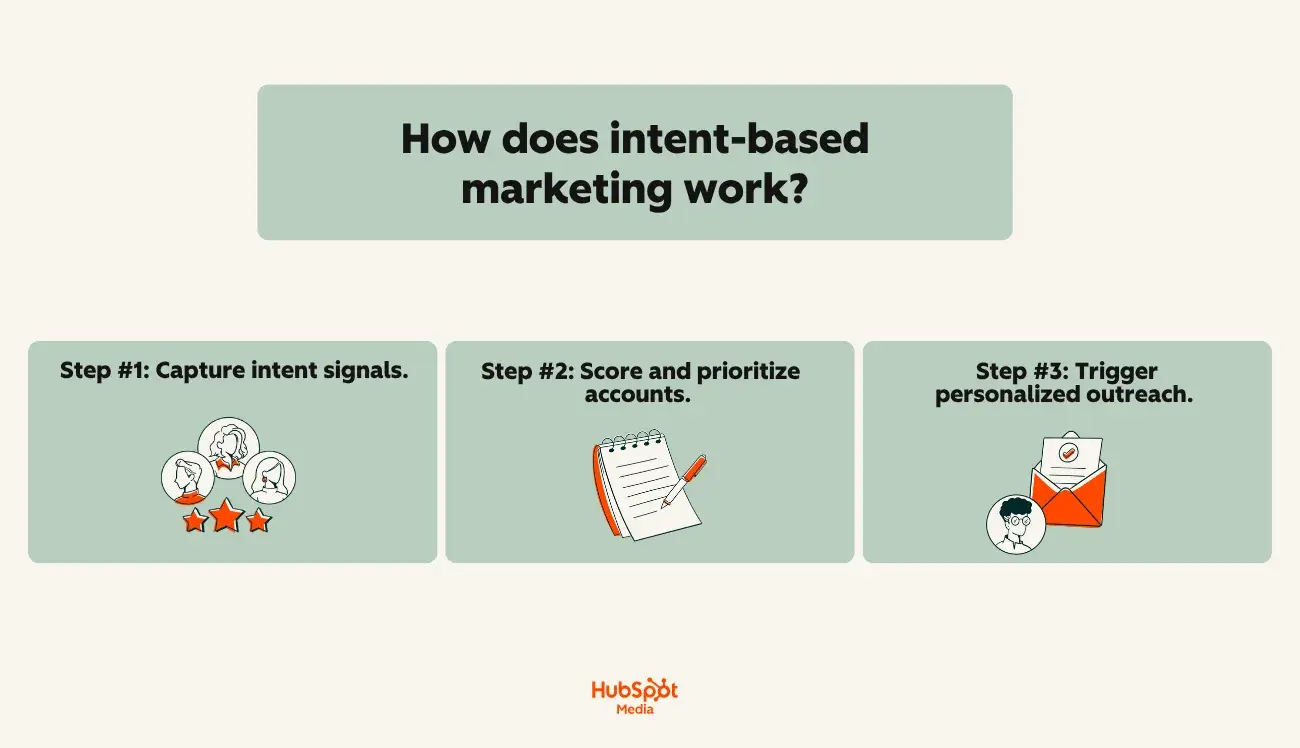
In practice, that’s three steps:
1. Capture intent signals.
Pull behavioral data from two sources:
First-party intent data is from your own channels (i.e., website activity, email engagement, CRM records, and form submissions).
However, third-party intent data is from external providers that track research behavior across publisher and partner networks.
2. Score and prioritize accounts.
Secondly, use marketing automation to weight each signal, then rank accounts by buying readiness so sales work the hottest first.
3. Trigger personalized outreach.
Lastly, when an account crosses your score threshold, marketing automation routes it to the right play: a tailored email sequence, a sales alert, or a retargeting ad.
A connected platform like HubSpot’s Smart CRM keeps the message matched to where the buyer actually is.
Pro tip: Want to learn more about intent-based marketing in under 30 minutes? Check out this video about buyer intent from the HubSpot Marketing YouTube Channel.
GO
Godwin Omale
Author
Writing about buyer intent, honest outreach, and building useful things for small sellers without an ad budget.
Get the updates
New posts in your inbox. No spam — unsubscribe anytime.
Both are buyer intent signals, but they sit at different stages of the journey.
Active intent indicates high buying readiness through direct actions, such as demo requests or visits to pricing pages. These buyers are close to a decision. (For example, a RevOps lead requests a demo, then returns twice in three days to compare your pricing tiers.)
Passive intent indicates early research behavior, such as content consumption or repeated topic engagement. These buyers are learning, not deciding. (For example, a marketing manager at the same company reads three of your posts on lead scoring but never fills out a form.)
Follow-up should change with the stage:
Active intent → move fast, sell directly. Reach out within hours, reference the specific action, and offer a concrete next step (i.e., a call, a trial, or a tailored demo).
Passive intent → nurture, don’t pitch. Enroll the contact in an educational sequence and let marketing automation advance the score until active signals appear.
Pro tip: Early-stage research increasingly starts in AI answer engines. HubSpot’s AEO Grader gives marketers a scored snapshot of how answer engines represent their brand today, while HubSpot AEO tracks how your brand appears across answer engines over time, analyzes competitors, and delivers prioritized recommendations to increase your visibility.
Intent-based Marketing vs. Traditional Marketing vs. ABM
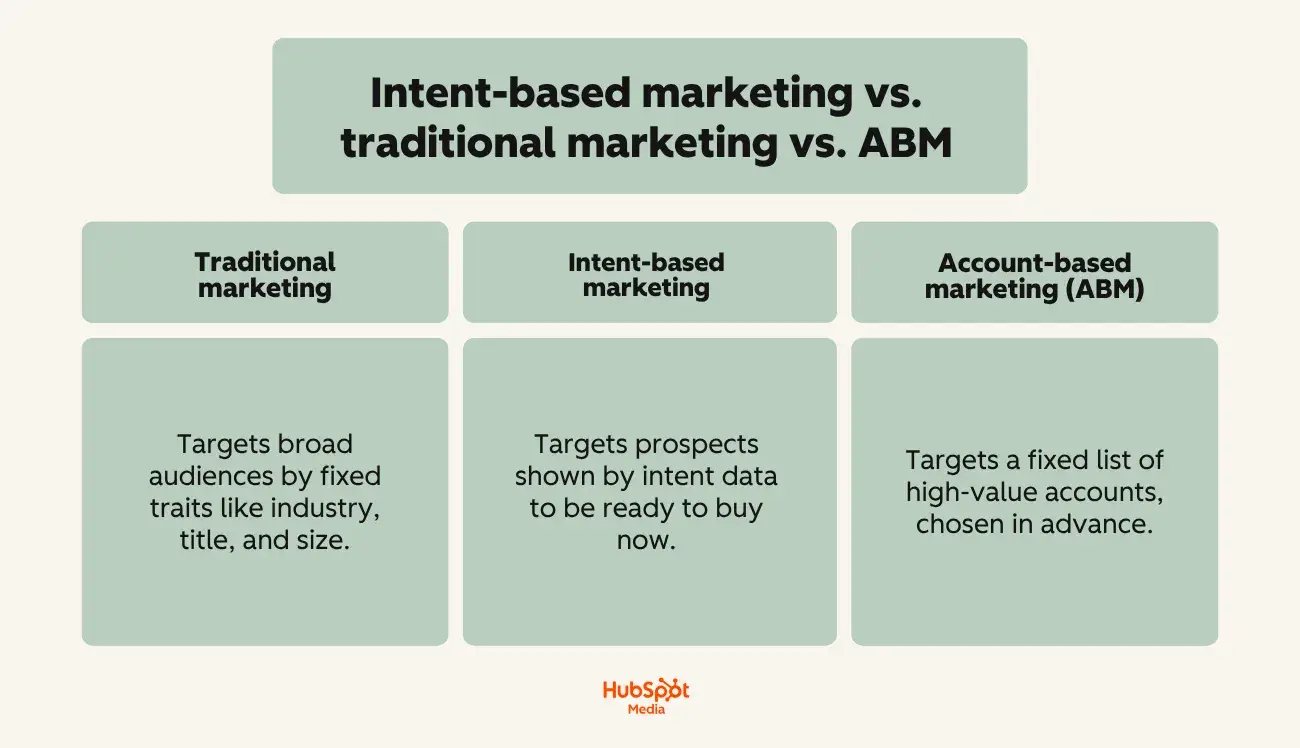
The difference between traditional marketing, intent-based marketing, and ABM can be confusing, so I’ve simplified each marketing framework into succinct definitions that’ll clarify how they’re different from one another:
Traditional marketing targets broad audiences by fixed traits like industry, title, and size, reaching everyone who fits the profile, whether or not they’re buying.
Intent-based marketing targets prospects identified in intent data as ready to buy now — the same profiles, filtered by active buyer intent.
Account-based marketing (ABM) targets a predefined list of high-value accounts, regardless of whether those accounts are currently in-market.
The single distinction that separates all three is what triggers the targeting: traditional marketing acts on who someone is, ABM on who you picked, and intent-based marketing on who’s actually ready.
Let’s walk through an example to illustrate the difference.
Let’s say you sell B2B SaaS project-management software. Here’s how it’ll play out across each approach:
Traditional marketing: You run a LinkedIn campaign to every “Operations Manager” at companies with 50 to 500 employees. Reach is broad, but most recipients aren’t shopping.
Intent-based marketing: You target only the operations managers whose companies are reading competitor comparison pages and searching “best project management tool” this week. (It’s the same profile, filtered by buyer intent.)
ABM: You hand-pick 50 dream accounts and build custom campaigns for each, whether or not they’re currently in-market.
The payoff? IBM improves campaign efficiency by allocating its budget to higher-likelihood buyers, boosting B2B marketing ROI and reducing customer acquisition costs.
IBM vs. ABM: Where They Overlap and Differ
Overlap: Both move past broad B2B marketing tactics to focus on specific accounts, and the strongest programs run them together.
Difference: ABM picks the accounts first, then markets to them. IBM lets intent data pick the accounts, surfacing ready buyers you might never have listed. Layer intent signals onto your ABM list, and you can prioritize the dream accounts that are actually in-market now.
Next, let’s talk through why intent-based marketing delivers better results — with in-depth explanations to back up every claim.
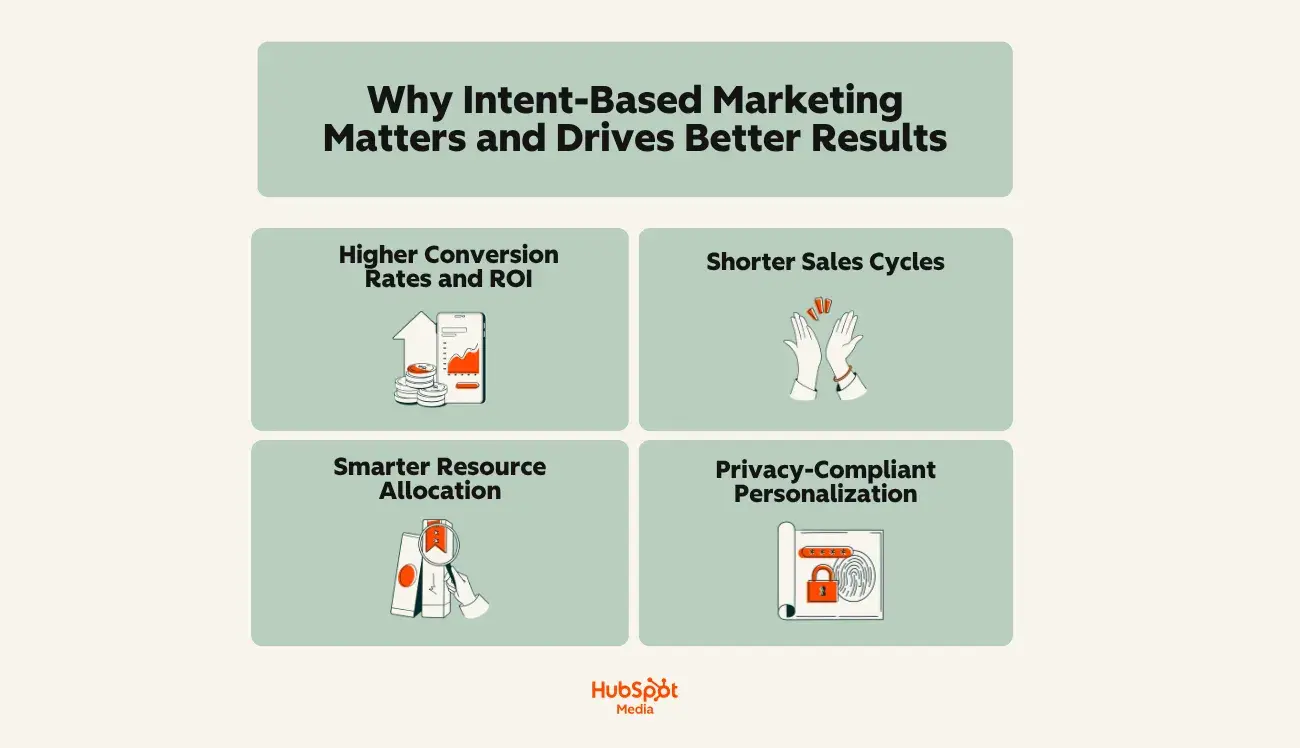
Why Intent-based Marketing Matters and Drives Better Results
This may be a hot take, but most marketing spend is wasted by design: Broad campaigns reach many people who will never buy; it’s a costly default in B2B marketing.
However, intent-based marketing flips that math. By acting on buyer intent, IBM concentrates its effort on accounts already moving toward a decision. So, instead of spending broadly and crossing your fingers that ROI is guaranteed, you get measurable improvement across the customer acquisition metrics revenue teams care about.
Overall, IBM allocates the budget to higher-likelihood buyers, which can boost campaign efficiency. Compared with less-targeted programs, the focus of intent-based marketing shows up in the following ways:
1. Higher Conversion Rates and ROI
Intent-led targeting works because you’re reaching people who are already in-market. Buyer intent signals reveal that a person or account is actively researching or weighing a purchase, so your message lands when interest is real, not random.
That timing lifts results at every step:
Response rates climb when outreach aligns with active research rather than interrupting cold prospects.
Lead-to-opportunity conversion improves since intent-qualified leads sit closer to a buying decision than list-based or form-fill leads.
Return on spend rises as the budget focuses on accounts likely to convert, boosting the efficiency of every B2B marketing dollar and lowering customer acquisition costs.
For example, a demand gen manager might retarget only accounts that viewed pricing and integration pages in the last 14 days. The same ad budget yields more demos by skipping the cold majority.
2. Shorter Sales Cycles
Intent data shortens the cycle by handing sales better timing and context. Active intent reflects high buying readiness (i.e., direct actions such as demo requests or pricing-page visits), a clear cue to engage now rather than wait.
When reps see the signal and its context, qualification friction drops:
Better timing: Sales reaches out while the account is actively evaluating, not weeks later.
Built-in context: The rep already knows which pages the buyer viewed, so discovery is faster and more relevant.
Fewer dead-end calls: Time goes to accounts showing readiness instead of cold lists.
For example, when an account requests a demo and revisits the pricing page, marketing automation alerts the rep instantly with the pages viewed, so the first call opens on the buyer’s actual use case.
3. Smarter Resource Allocation
Not every buyer intent signal deserves the same response, and intent data tells you where to spend. Passive intent reflects early research (i.e., content consumption or repeated engagement with a topic), so these accounts need nurture, not a sales call.
Match the investment to the stage:
High-intent accounts get direct outreach and sales priority.
Passive-intent accounts enter marketing automation nurture flows that build interest over time.
Low- or no-signal accounts get minimal spend until behavior changes.
Automation delivers its value here by automatically routing budget, outreach, nurture, and follow-up to higher-probability accounts, so teams stop spreading effort evenly across a list that isn’t steadily improving customer acquisition efficiency.
Pro tip: Review your nurture flows quarterly. Accounts that shift from passive to active signals should graduate to a sales-ready sequence. Don’t let them stall.
4. Privacy-Compliant Personalization
Strong results don’t require invasive tracking. Moreover, IBM relies on data collected with consent, making personalization both relevant and compliant.
First-party intent data is information you collect directly through your own channels (i.e., website activity, email engagement, CRM records, and form submissions). You own it, the visitor shared it knowingly, and it powers accurate personalization.
Third-party intent data is research on aggregated user behavior from outside providers across publisher and partner networks. It widens reach but faces tighter limits under regulations like GDPR and CCPA, which restrict how it can be collected and used.
Leaning on first-party data lets you personalize responsibly. For example, you can respond to what someone actually did, like:
A visitor who reads your fall lookbook and then subscribes gets a tailored fall-collection email, not a generic blast.
A prospect who downloads a security whitepaper gets a follow-up about compliance features, because they raised their hand.
Pro tip: Store consent and preferences in your CRM alongside behavioral data. Consent-aware personalization scales only when permission status travels with the contact record.
How to Get Started with Intent-based Marketing
1. Define your ideal customer profile and buying signals.
Start by clearly identifying who you’re targeting and what behaviors indicate purchase intent.
Map out the specific actions that suggest someone is actively researching solutions in your category, such as:
Visiting pricing pages
Downloading whitepapers
Searching for competitor comparisons
The more precise you are about these signals, the more effective your targeting will be.
(This step aligns perfectly with the Express stage of the Loop Marketing framework, where you define your brand identity and ideal customer profile before leveraging AI to create targeted campaigns.)
That said, by establishing clear buyer personas and intent signals upfront, you set the foundation for AI-powered personalization throughout the entire loop.
2. Choose your intent data sources.
Next, select the appropriate combination of first-, second-, and third-party intent data for your needs.
First-party data from your website and CRM shows direct engagement with your brand.
Second-party data comes from a trusted partner sharing their own first-party data, giving you insight into audiences that engage with a complementary brand rather than your own.
Third-party providers reveal when prospects are researching topics related to your solution online.
Consider your budget and identify the sources that align best with your target accounts.
Remember, most consumers are not fans of third-party sourcing, so be cautious when collecting and using third-party data, and ensure you follow the GDPR and/or CCPA guidelines.
Jun 28, 2026
Product
Categories
Product5Growth3Engineering2Company1
Follow us on
Get the updates
New posts in your inbox. No spam — unsubscribe anytime.